A second bed that slides out from under the first
The problem with a guest bed is the three hundred and sixty days a year nobody is in it. This one slides out from under the main bed and goes straight back in: out when someone stays, gone when they leave, and the space underneath still works as storage either way.
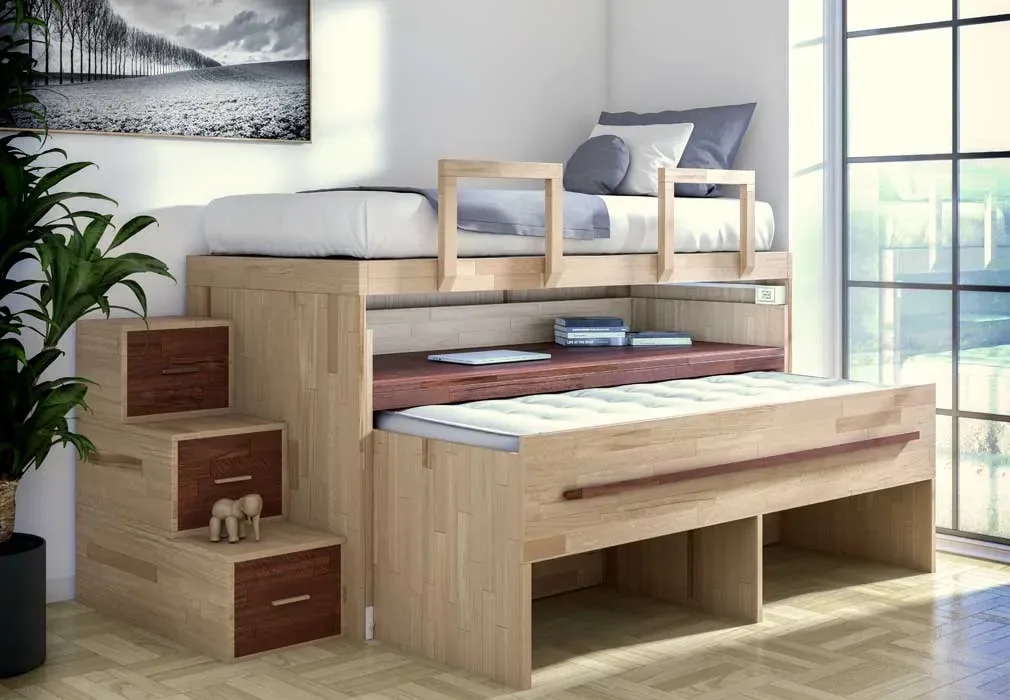
How it slides away
A trundle bed usually means a low frame on castors that you drag out from under a bed and then have nowhere to put. This one is built differently: it slides back into the drawer unit under the main bed, the one it came out of, so when it is away it is not parked somewhere, it is inside the furniture.
That is the difference that matters in a small room. A guest bed that has to live somewhere is a guest bed you resent. One that disappears into the base of an existing bed costs you nothing on the days nobody is staying — which is most days.
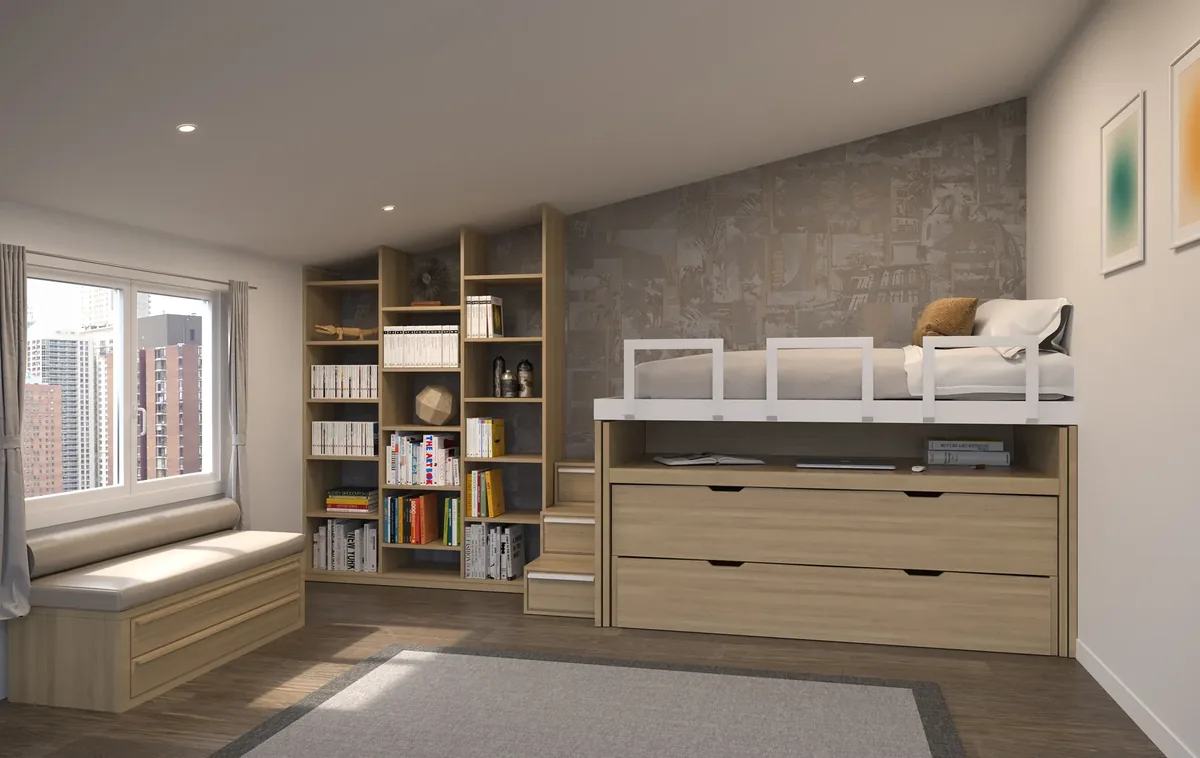
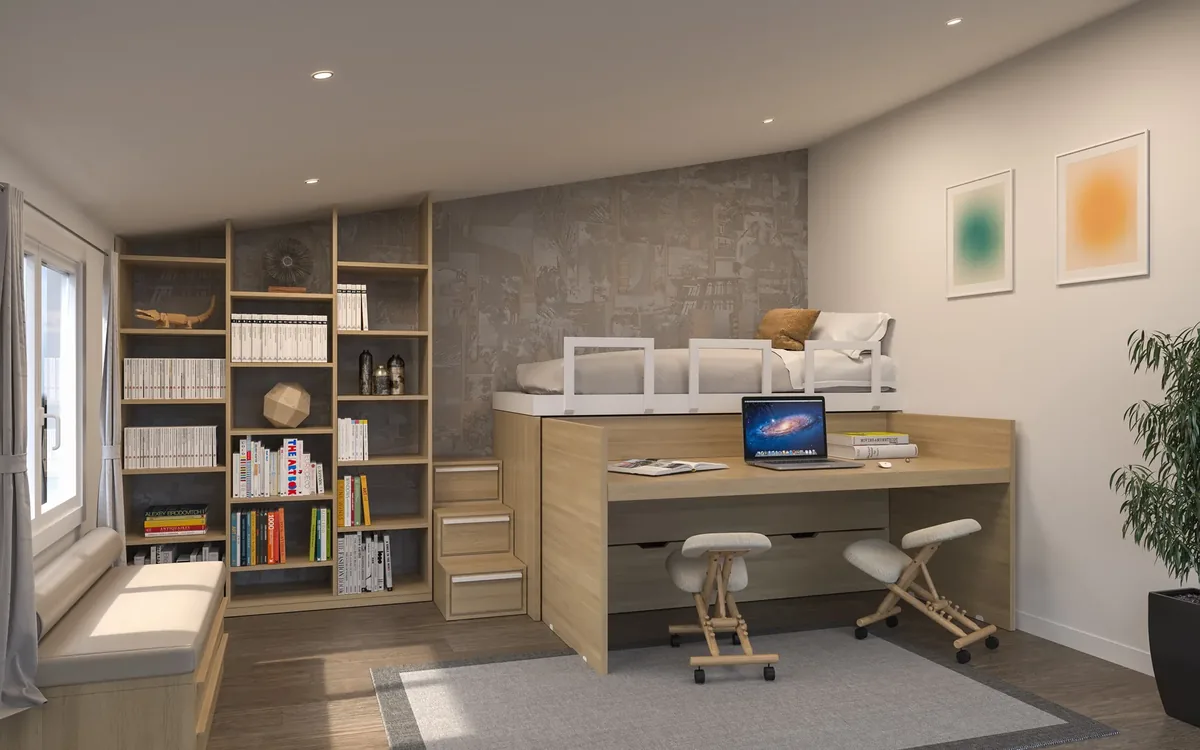
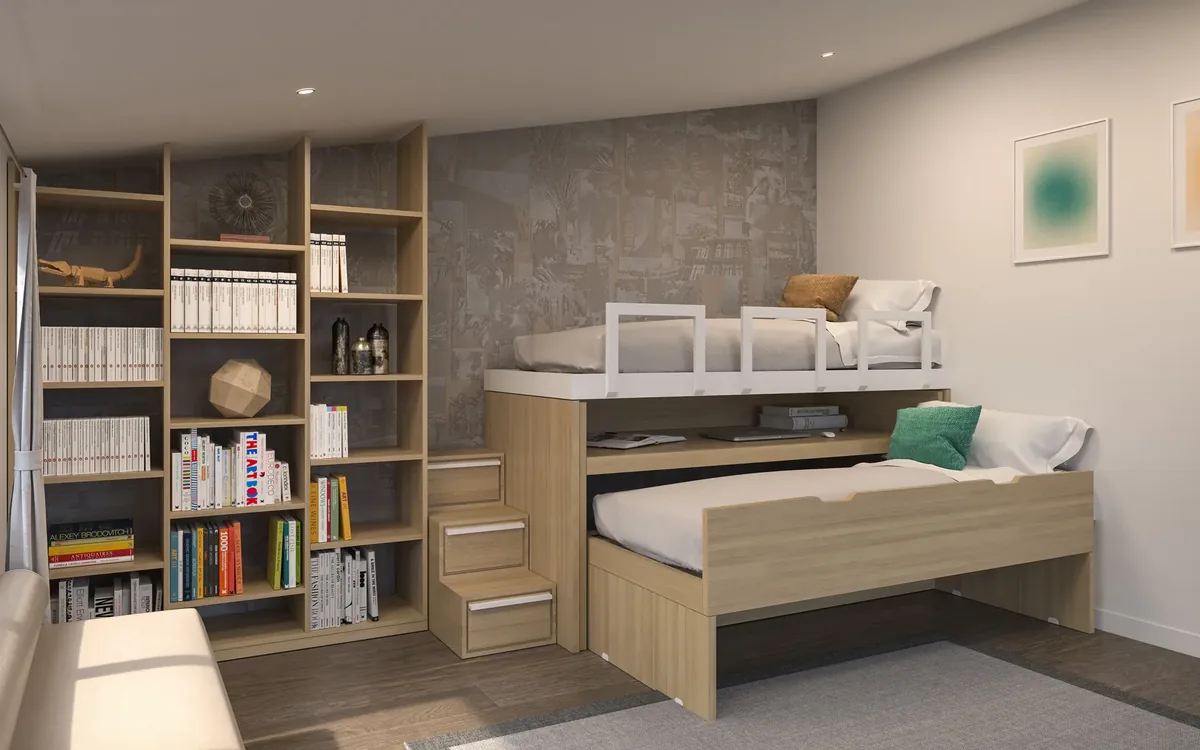
The same piece of furniture in all three photographs. Nothing is added or taken away between them.
And the storage you keep
The part people assume they are giving up is the storage, and they are not. The design leaves room under the main bed for two large drawer units, which in a child's room generally means toys, books and linens.
So the space under the bed is doing two jobs rather than one: drawers all year, and a second bed on the nights it is needed. If what you actually want under there is a full wardrobe rather than a guest bed, that is a different configuration — see the bed with a wardrobe underneath.
Three beds in one room
This is where the idea stops being a guest arrangement and becomes a solution to a real problem. There is a particular version that puts three single beds on three levels, each one sliding out from under the one above. Closed, the three take the floor of one.
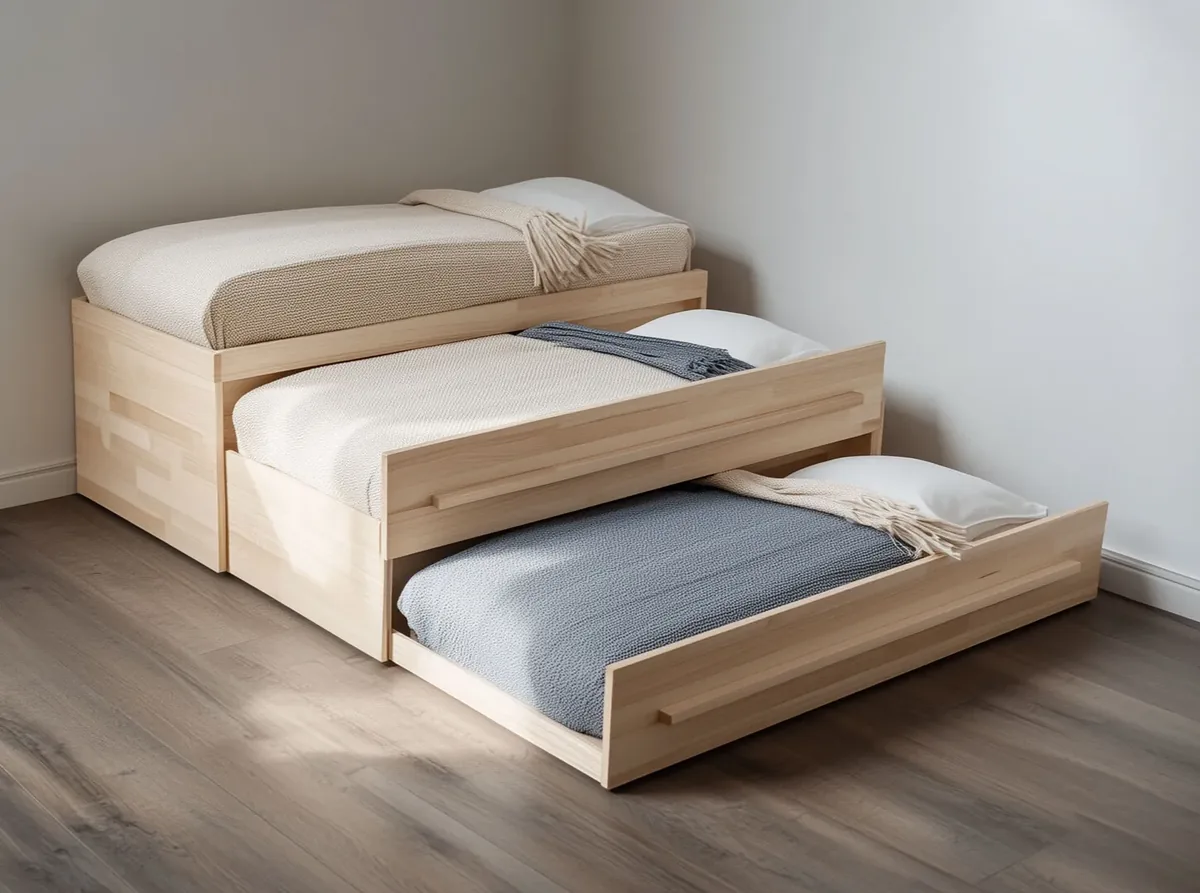
Three children in one room, or two children and whoever is staying the night, without three permanent beds standing on the floor the rest of the time. If all three beds are permanent rather than occasional, the layout to look at instead is offset beds along two walls — that is two or three children in one room.
The version with a desk
The arrangement most people end up with is the one in the photographs above: a pull-out bed, a desk and two large drawer units in a single block. The same few square feet are a workspace on weekdays and a guest bed when someone comes, and neither has to be dismantled for the other.
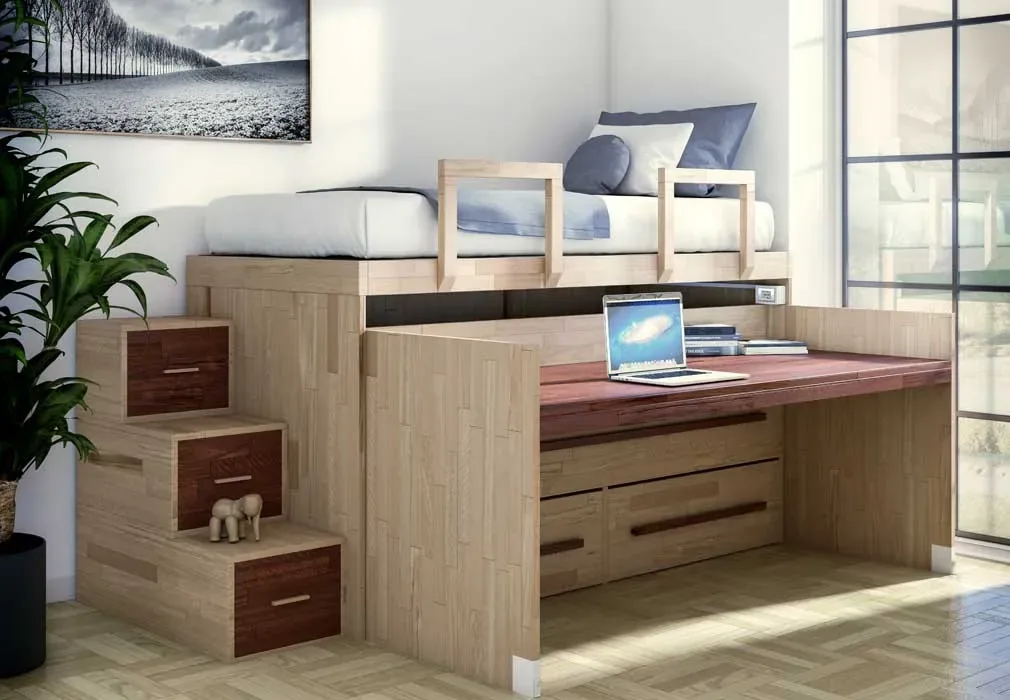
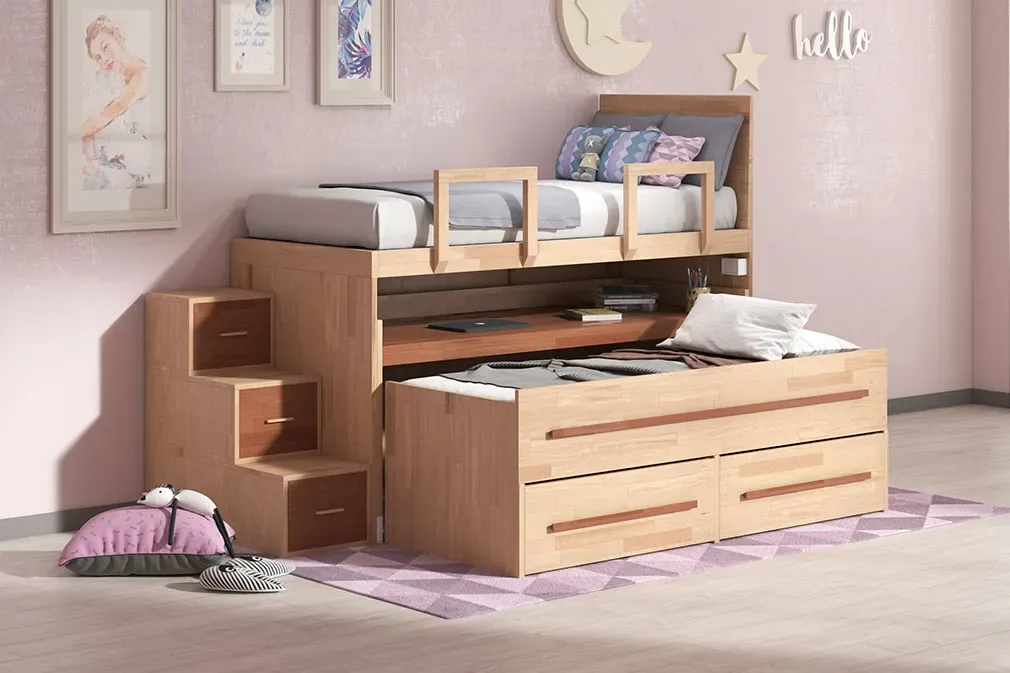
From there it is configurable and made to measure: more drawers instead of the desk, the staircase on the other side, the desk deeper or shorter, the whole block sized to the wall you have. Nothing here is picked off a shelf, which is why the first thing we ask for is the room.
What it is made of
Real solid wood, in beech, with finishes described as eco-friendly and non-toxic — which in a child's room is not a marketing line, it is the reason to avoid particle board and the glues that come with it.
The base is usually tatami, which is walkable, breathable, thermo-acoustic insulating and easy to clean. Slatted and perforated wooden bases are available as alternatives. The range fits single, square, French and double mattresses.
It is made in Italy by Cinius, and we are their sole representative in the United States. We deliver and install across New York City, New Jersey and Connecticut.
Tell us the room and how often the second bed is used
Room width, length and ceiling height, how many sleep there regularly, and whether you want a desk or drawers in the same run. Dimensioned drawing and quote come back free.
Common questions
Where does the second bed go when it is not in use?
It slides back under the main bed, into the unit it came out of, so it is inside the furniture rather than parked somewhere. The design still leaves room underneath for two large drawer units.
What mattress sizes does it take?
Single, square, French and double. Everything is made to order, so the bed is built around the mattress rather than the other way round.
Can you have three beds in one room?
Yes, with a particular version: three single beds on three levels, each sliding out from under the one above. Closed, the three take the floor of one.
What is the bed base made of?
Usually tatami: walkable, breathable, thermo-acoustic insulating and easy to clean. Slatted and perforated wooden bases are also available. The furniture is solid beech with eco-friendly, non-toxic finishes.
Can it include a desk?
Yes — the usual block is a pull-out bed, a desk and two large drawer units together, so the same footprint works on weekdays and sleeps a guest at the weekend. Everything is made to measure, so the mix is yours.